

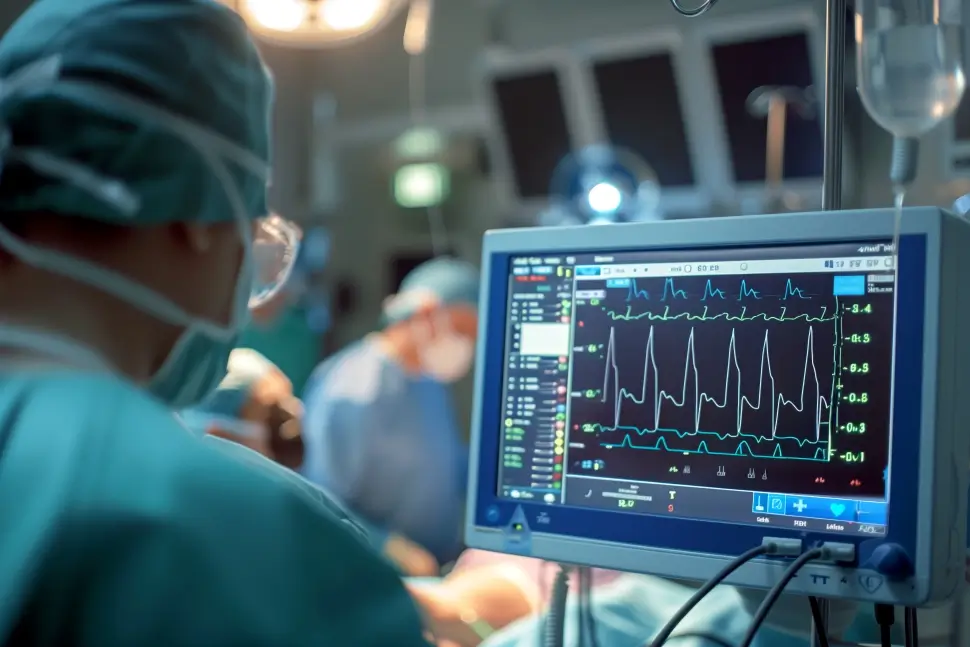
Artificial intelligence and machine learning are bringing dramatic changes to healthcare, and one of the specialties where their impact is most visible is anesthesiology. Anesthesia is a data-heavy field where every decision must be precise. During surgery, anesthesiologists monitor heart rate, oxygen levels, breathing, and blood pressure while also managing drug dosing and anticipating complications. In such an environment, AI becomes a powerful partner. By analyzing patterns in real time, learning from massive datasets, and predicting patient responses, AI systems are transforming anesthesia into a safer, more personalized, and more efficient practice.
The Role of AI in Modern Anesthesiology
The anesthesiologist’s role has always required balancing many variables at once. Patients differ in their responses to drugs, underlying health conditions, and tolerance levels. Surgical procedures also vary in complexity and duration. In the past, anesthesiologists relied on their training and intuition to manage these complexities. Today, AI tools can assist by analyzing information more rapidly and comprehensively than humans can alone. Algorithms trained on thousands of surgical cases can predict potential risks, recommend drug adjustments, and provide decision support. This does not mean replacing the anesthesiologist, but rather enhancing human expertise with computational precision.
Predicting Surgical Risks with AI
One of the most significant applications of AI in anesthesia is its ability to predict surgical risks before they happen. Patient medical records, lab tests, imaging scans, and even wearable device data can be fed into machine learning models. These models can highlight patients who are more likely to experience complications such as respiratory failure, blood pressure instability, or adverse drug reactions. By identifying these risks in advance, anesthesiologists can plan accordingly. For example, if a model predicts a higher chance of postoperative breathing issues, the anesthesiologist can prepare respiratory support equipment and adjust anesthesia protocols to reduce the risk. Such predictive capability leads to more informed preparation and better outcomes.
Automating Drug Dosing and Delivery
Drug administration is one of the most delicate tasks in anesthesiology. Too much anesthesia can lead to prolonged sedation, slower recovery, and increased risks. Too little can cause patients to become aware during surgery, a traumatic experience. AI-driven closed-loop systems are now being developed to address this challenge. These systems continuously monitor the patient’s vital signs and adjust anesthetic infusion rates accordingly. Studies show that such automated systems maintain more stable drug levels than manual control. By ensuring precise dosing, AI reduces complications and allows anesthesiologists to focus on broader aspects of patient care.
Enhancing Patient Monitoring During Surgery
Monitoring a patient during surgery is complex because multiple parameters must be tracked simultaneously. While anesthesiologists are highly skilled, human attention has natural limits. AI systems, however, can process vast amounts of data instantly. For example, subtle shifts in oxygen levels or blood pressure might not immediately trigger alarms but could indicate emerging problems. AI can recognize these patterns early and alert the clinician, giving them time to act before a crisis develops. This extra layer of vigilance significantly improves patient safety and reduces the likelihood of adverse events in the operating room.
Personalized Postoperative Pain Management
AI is also reshaping the way pain is managed after surgery. Every patient experiences pain differently, and standardized pain protocols often fail to address individual needs. Machine learning models can analyze factors such as genetics, medical history, and type of surgery to predict which patients are likely to experience higher levels of pain. Based on these predictions, anesthesiologists can design personalized pain management strategies. This might involve combining non-opioid medications with physical therapy or counseling. The result is better pain control, reduced opioid dependency, and faster recovery.
AI in Training and Simulation
The training of anesthesiologists is another area where AI shows promise. Traditional simulations use pre-programmed scenarios, but AI-powered simulations adapt in real time based on the trainee’s actions. For example, if a trainee makes a mistake in managing a virtual patient’s airway, the AI can escalate the situation, forcing the trainee to make additional decisions. These adaptive simulations create realistic learning experiences, preparing new anesthesiologists for rare but critical situations without risk to actual patients. By strengthening skills in a controlled environment, AI enhances the quality of medical education.
Benefits of AI for Patients and Providers
For patients, the most important benefit of AI in anesthesia is safety. Improved monitoring, precise dosing, and personalized pain management all contribute to better surgical experiences. Patients often recover faster, report fewer side effects, and feel more confident about their care. For anesthesiologists, AI reduces routine workload by automating repetitive tasks such as monitoring and drug adjustments. This allows them to focus on complex decision-making and patient communication. Hospitals also benefit through shorter hospital stays, fewer readmissions, and overall cost savings. AI creates a system where both patients and providers achieve better outcomes.
Challenges in Implementing AI in Anesthesia
Despite its advantages, AI adoption faces obstacles. Patient data is highly sensitive, and strict privacy protections must be enforced. Algorithms must also undergo rigorous testing to prove they work across diverse populations and surgical scenarios. Clinician trust is another factor. Anesthesiologists must be confident in AI systems and receive proper training to use them effectively. Cost is an additional concern, especially in resource-limited hospitals. Implementing advanced AI monitoring and dosing systems requires significant investment, which may not be feasible for all healthcare settings. Addressing these challenges is critical for widespread adoption.
The Future of AI in Anesthesia
The future of AI in anesthesiology looks promising. In the coming years, we may see fully autonomous systems managing routine surgeries under human supervision. Anesthesiologists will remain essential for handling complex cases and emergencies but will benefit from AI assistance in everyday practice. AI will likely integrate with genomics, wearable devices, and telemedicine to create a more comprehensive and personalized approach to surgical care. Ethical considerations will also guide development, ensuring systems are transparent, unbiased, and accessible to all patients. Ultimately, the partnership between human expertise and artificial intelligence will set new standards for safety, precision, and patient-centered care in anesthesiology.
FAQs
How is AI used in anesthesiology today?
AI is being used to predict surgical risks, automate drug dosing, monitor patients during surgery, personalize pain management, and improve training for anesthesiologists.
Will AI replace anesthesiologists?
No, AI is designed to assist rather than replace. Anesthesiologists remain essential for complex decisions, emergency responses, and patient communication.
What benefits do patients gain from AI in anesthesia?
Patients benefit from safer surgeries, fewer complications, faster recovery times, personalized pain management, and reduced risk of opioid dependency.
What are the challenges of AI adoption in anesthesiology?
Challenges include ensuring patient data privacy, validating algorithms across diverse populations, building trust among clinicians, and managing high costs of implementation.
How soon will AI become standard in operating rooms?
Some AI tools are already in use in advanced hospitals. Widespread adoption will likely occur over the next decade as costs decrease, clinical validation improves, and training becomes more widespread.